About conference
The 2nd Nencki Conference for Life Sciences 2026 – Focus on Chromatin Biology
One of the central tasks of chromatin biology is to decipher the mechanistic link between genome sequence and phenotype. DNA accessibility, long-range contacts, and the local chemical environment of regulatory elements determines when and where transcription occurs, how cellular states are maintained, and how cells respond to perturbation. These features of genome biology are inherently integrative: gene expression depends on metabolic state of the cells and signaling input it receives. Likewise, the intrinsic properties of chromatin-associated factors, proteins, DNA, RNA, and small molecules, set reaction rates, binding equilibria, and nuclear functions.
The 2nd Nencki Conference for Life Sciences 2026 – Focus on Chromatin Biology is designed to capture the most recent progress across the major conceptual and technical frontiers of the field. The program is organized around four complementary angles:
- Chromatin & Metabolism,
- Chromatin Structure & Transcriptional Regulation,
- Computational Approaches in Genome Biology, and
- Structure & Function of Nuclear Bodies.
Together, these sessions connect biochemistry and chemical biology (metabolite-sensitive chromatin regulation), biophysics (genome folding, condensates, and nuclear compartmentalization), and (epi)genomics (high-throughput, quantitative readouts of chromatin and transcription, machine learning in genome biology).
A particular emphasis is placed on mechanisms that translate molecular and physical constraints into transcriptional outcomes: how metabolic cues remodel chromatin to tune gene expression; how DNA sequence and three-dimensional genome architecture define regulatory wiring; and how the intrinsic, biophysical properties of proteins and nucleic acids shape transcription.
By bringing these perspectives into one program, the conference aims to sharpen current models of gene regulation and highlight emerging directions for a predictive, quantitative understanding of genome function.
The 2nd Nencki Conference for Life Sciences 2026 – Focus on Chromatin Biology will spotlight breakthrough advances in chromatin research across four cutting‑edge thematic areas. A special Satellite Event will highlight the newly launched Translational Research Centre at the Nencki Institute, developed within Bio‑Imaging Poland, showcasing new opportunities for innovation in diagnostics and translational science.
Nencki Conference for Life Science Series
The Nencki Institute is a flagship research institution of the Polish Academy of Sciences. Conferences and workshops Organized by Nencki Institute focus on scientific excellence and propagate international networking, equality, and diversity.
Main informations
Venue: Conference Hall at Nencki Institute of Experimental Biology of the Polish Academy of Sciences (3 Pasteur Street, 02-093 Warsaw, Poland).
Main Sponsors
The 2nd Nencki Conference for Life Sciences 2026 – Focus on Chromatin Biology is supported by EMERALD (European Molecular Biology Laboratory and Nencki Research Alliance for Life Discoveries). EMERALD is supported by the Minister of Science and Higher Education of the Republic of Poland grant no. MNiSW/2024/DWM/272.

The 2nd Nencki Conference for Life Sciences 2026 – Focus on Chromatin Biology is supported within the framework of the project “Biological and Biomedical Imaging Infrastructure – Bio-Imaging Poland” (Grant No. KPOD.01.18-IW.03-0017/23).

Conference Fees
The conference fee depends on the type and date of registration.
Early Bird registration (until 31st March 2026, 23:59 CET):
- Young Scientist (Master or PhD students, technicians): 300 PLN (~75 EUR)
- Academic: 600 PLN (~150 EUR)
Regular registration (1st April–15th May 2026):
- Young Scientist (Master or PhD students, technicians): 400 PLN (~90 EUR)
- Academic: 700 PLN (~165 EUR)
Approximate EUR amounts are provided for reference only. The Dynamic Currency Conversion (DCC) mechanism allows international cardholders to pay for the conference in their home currency (e.g., EUR, USD, GBP). The transaction amount is settled in the equivalent value in PLN.
Registration Closed
Registration for the 2nd Nencki Conference for Life Sciences 2026 is now closed. Thank you for your submissions and interest in this year’s meeting.
We look forward to welcoming participants to 2nd Nencki Conference for Life Sciences 2026 – Focus on Chromatin Biology, taking place 17-19 June 2026 in Warsaw, Poland.
Program
Wednesday
-
Inauguration of the Translational Research Centre at the Nencki Institute (event only in Polish)
-
Otwarcie wydarzenia i powitanie Gości
-
Wystąpienie prof. dr hab. Agnieszki Dobrzyń, Dyrektor Instytutu Nenckiego
-
Wystąpienie prof. dr hab. inż. Marii Mrówczyńskiej, Wiceminister Nauki
-
Wystąpienie mgr Joanny Kuszlik-Cichosz, Z-cy Dyrektora OPI Państwowego lnstytutu Badawczego
-
Debata: Z nauki do biznesu - polskie jednostki naukowe na rynku innowacji
Prof. Maria Mrówczyńska (Ministerstwo Nauki i Szkolnictwa Wyższego)Prof. Agnieszka Dobrzyń (lnstytut Biologii Doświadczalnej PAN)Prof. Piotr Garstecki (Scope Fluidics S.A.)Prof. Piotr Sankowski (lnstytut Badawczy IDEAS, Uniwersytet Warszawski) -
Dyskusja/Wizyta w Centrum Badan Translacyjnych lnstytutu Nenckiego
-
-
Registration + Set up for poster session 1
-
Welcome - Director of the Nencki Institute
Agnieszka Dobrzyń -
Keynote lecture: Probabilistic epigenetic control of complex disease risk
Andrew Pospisilik -
Session 1: Chromatin & Metabolism
Grzegorz Sumara (chair)-
White adipose tissue: from metabolic complications to cellular heterogeneity
Mikael Ryden -
Epigenetic Memory of Obesity
Ferdinand von Meyenn -
Refreshments & Poster session 1
-
Nuclear speckles regulate ribosomal biogenesis in the early embryo
Joanna W. Jachowicz -
BTAF1/MOT1 homolog in Arabidopsis controls lncRNA transcription
Lien Brzeźniak -
Methionine synthase reductase regulates heterochromatin independently of methionine synthesis through mitochondrial homeostasis
Fernanda Rezende Pabst -
Control of nucleotide pool balance by deamination
Matthias Bochtler
-
-
Refreshments & Poster session 1 continued
Thursday
-
Set up for poster session 2, 3 & 4
-
Refreshments & Poster session 2
-
Keynote lecture: Mechanisms of histone H3K9 methylation and condensed chromatin formation
Susan Gasser -
Session 2: Chromatin structure & Transcriptional regulation
Paweł Mikulski (chair)-
Molecular mechanisms of chromosome folding and enhancer wiring
Elphege Nora -
Epigenetic plasticity in the myeloid compartment
Alessandro Gardini -
Lunch
-
Poster session 3
-
Epigenetic mechanisms of promoter silencing by transcriptional readthrough
Jacek Majewski -
RNA-binding proteins strengthen CTCF-driven architectural loops during Differentiation
Bondita Dehingia -
SETD2 methyltransferase activity promotes correct transcription initiation and termination
Magda Kopczyńska -
Remember & Forget: mechanisms of epigenetic transcriptional memory
Paweł Mikulski
-
-
Session 3: Computational approaches in genome biology
Aleksandra Pękowska (chair)-
How to decompose between and within cell-type transcriptional variability in scRNAseq data of heterogeneous tissues
Wolfgang Huber -
Can we learn enhancer biology by training black-box AI models?
Bartosz Wilczyński -
Refreshments & Poster session 4
-
Identifying multimodal molecular programs with mTopic
Marcin Tabaka -
Local 3D chromatin structure encodes environmental information
Miguel Montez -
Transient 3D chromatin interactions modulate AR-mediated transcription and drive lineage plasticity in prostate cancer
Joanna Achinger-Kawecka -
GO-a-GO: an R package for Gene Ontology enrichment analysis of gene pairs
Aleksander Jankowski
-
-
Research assessment in times of a rapidly changing world. Presentation and panel discussion.
Wolfgang Huber -
Get together
Friday
-
Refreshments
-
Keynote lecture: Transcription Specificity Through Kinetic Proofreading
Daniel Larson -
Session 4: Structure & function of nuclear bodies
Adam Kłosin (chair)-
Biophysical principles of self-organising genomes
Thomas Quail -
Environmental regulation of nuclear organization and function
Daphne Cabianca -
Refreshments
-
Dances with condensates: Establishment of heterochromatin compartments and regulation of nucleolar interactions
Gary H. Karpen -
The Arabidopsis Splicing Factor CWC22 Forms Phase-Separated Condensates and Regulates Embryogenesis
Marta Koblowska -
Identification of a paraspeckle-like nuclear body and its RNA scaffold in C. elegans
Oksana Okhrymovych -
Transcriptional collapse in SCA7 is associated with altered nuclear organization and RNA polymerase II dynamics
Pawel M. Switonski
-
-
Poster prize ceremony & Final remarks
-
Picnic at the Nencki Institute
Speakers
-

Susan Gasser
ISREC FoundationLausanne, Switzerland -

Daniel Larson
National Cancer Institute, National Institutes of HealthBethesda, USA -

Andrew Pospisilik
Department of Epigenetics, Van Andel InstituteGrand Rapids, Michigan, USA -

Daphne Cabianca
Helmholtz MunichNeuherberg, Germany -
Alessandro Gardini
The Wistar InstitutePhiladelphia, USA -

Wolfgang Huber
European Molecular Biology Laboratory (EMBL)Heidelberg, Germany -
Gary H. Karpen
University of CaliforniaBerkeley, USA -

Ferdinand von Meyenn
ETH Zurich, Department of Health Sciences and TechnologySchwerzenbach, Switzerland -
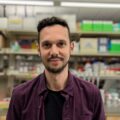
Elphege Nora
Cardiovascular Research Institute, University of CaliforniaSan Francisco, USA -
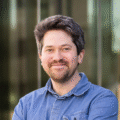
Thomas Quail
European Molecular Biology Laboratory (EMBL)Heidelberg, Germany -

Mikael Ryden
Karolinska InstitutetStockholm, Sweden -

Bartosz Wilczyński
Uniwersytet WarszawskiWarsaw, Poland
Organizers
-
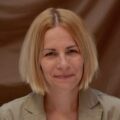
Aleksandra Pękowska
Nencki Institute of Experimental Biology, PASWarsaw, Poland -

Adam Kłosin
Nencki Institute of Experimental Biology, PASWarsaw, Poland -

Agnieszka Dobrzyń
Nencki Institute of Experimental Biology, PASWarsaw, Poland -

Paweł Mikulski
Nencki Institute of Experimental Biology, PASWarsaw, Poland -

Grzegorz Sumara
Nencki Institute of Experimental Biology, PASWarsaw, Poland
Sponsors









Info
Venue
CN Conference Hall at Nencki Institute of Experimental Biology of the Polish Academy of Sciences (3 Pasteur Street, 02-093 Warsaw, Poland).
How to get to Nencki Institute?
By bus
From the airport
From “Lotnisko Chopina – Przyloty“ bus stop (Arrivals) you might take a bus 175 (Pl.Piłsudskiego direction) or bus 188 (Gocławek Wschodni direction). Trip should take 16 minutes. Get off at “Szpital Banacha” bus stop at Żwirki i Wigury Street. From there it is less than a 10 – minute walk to the Institute.
You can buy a ticket from the ticket machine either at a bus stop or in a bus. Only card payments are accepted. A 20-minute ticket costs 3,40PLN.
From train station
You might take a bus 504 (Direction Os. Kabaty) or 175 (Direction Lotnisko Chopina) from “Dw. Centralny“ bus stop and get off at “Pomnik Lotnika 01” bus stop at Żwirki i Wigury Street. From there it is less than a 10 – minute walk to the Institute.
By tram
From the central train station you might take a tram 9 from “Dw.Centralny” tram stop (P+R Al.Krakowska direction) and get off at “Wawelska 04” tram stop at Grójecka Street. From there it is less than a 5 – minute walk to the Institute.
By taxi
You might catch a taxi cab outside the terminal or central train station.
You can also call any of the taxi corporations: Ele TAXI +48 22 811 11 11, Radio Taxi +48 22 19191, WAWA Taxi +48 22 333 4444; SAWA Taxi +48 22 644 44 44; Super Taxi +48 22 19 622.The cost of the ride from the airport to the Institute should be approximately 12 EUR (50 PLN). The ride should take 10-15 minutes.
General info
- Official currency: polish zloty (PLN)
- Electricity: 220 ~ 230V, 50 Hz
Accessibility
We strive to host accessible event that enable all individuals, including individuals with disabilities, to engage fully. For inquiries about accessibility, please contact conference2026@nencki.edu.pl
About poster session
- Poster size: max. A0
- Poster orientation: vertical
- Language of the talks and posters: English
Contact
Nencki Institute of Experimental Biology of the Polish Academy of Sciences
3 Pasteur Street, 02-093 Warsaw, Poland
conference2026@nencki.edu.pl